
A Day Out at The National Botanic Gardens
Spring is a beautiful time to visit Dublin’s Botanic Gardens, where nature meets history in a remarkable setting. While you’re there, check out its very famous neighbours.
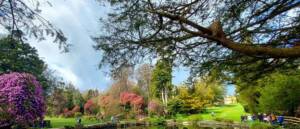
With wild native Irish plants, tree walks, rose gardens, rock gardens, rivers and ponds, Dublin’s National Botanic Gardens are a hidden haven. Founded in 1875, during the Regency Period of Georgian Dublin, there are more than fifty acres to explore. Some go simply for the peace and quiet, while others are keen to see the huge lily pads, rare orchids and, as summer comes in, the wide variety of roses; but the gardens were originally created to be a centre of learning. Exploring how plants could be used for food, medicine and fabric dyeing, Georgian botanists gleaned vital insights into advances in health and wellbeing. Since then the Botanic Gardens have continued to play a major part in Irish horticultural history. It was here, during the Great Famine, that researches identified what was causing the fatal potato blight.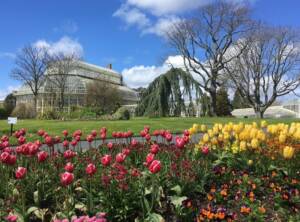
As the years went on, intrepid world travellers brought back plant and seed specimens, and the Gardens continue to be a significant research and training centre. Today there are more than 17,000 plants to be found, including at least 300 endangered species, and six that are extinct in the wild, but you don’t have to be an expert to enjoy spending time there. Dublin devotees know the restorative power of simply spending time in the enveloping beauty of the grounds.
An inspirational spot
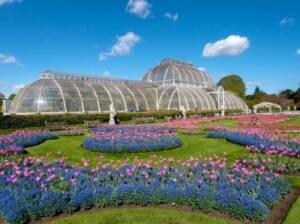
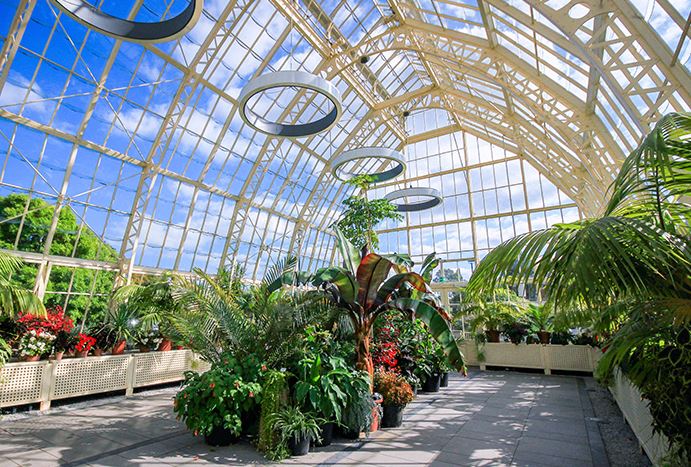
To many, the historic glasshouses are a major draw. Originally built from wood, The Great Palm House was recreated in 1883 by the famous Richard Turner, who also devised the Gardens’ Curvilinear Range, and would go on to design the glasshouses at London’s Kew Gardens. During restoration in the early 2000s, it was discovered that the Great Palm House was made from more than 7,000 individual parts. Including the Orchid House, and now fully restored and replanted, it is the tallest building in the Gardens. Turner, who was born in Dublin, is regarded as one of the most important glass house designers of his era, and examples of his work can also be seen at the Winter Gardens in Regent’s Park London, and in Belfast’s Botanic Gardens. The Teak House, a later addition, houses the annual Orchid Fair each Spring. While serious scholars spend time at the National Herbarium and Museum collection, others come for the atmosphere. There is a sensory garden, rock gardens, and a cactus collection. The famous Viennese philosopher Ludwig Wittgenstein so enjoyed reading and writing in the Palm House that a plaque now commemorates his favourite spot. As a research centre, dogs, picnics, jogging, cycling and ball games aren’t allowed, but that also works to preserve the beautifully peaceful atmosphere of this special place.
Making a day of it
While you’re there, admire sculptures including Charles Jencks’ ?What Is Life?, celebrating the discovery of DNA and RNA. Then, stop off at the café, visitor centre and bookshop. Exhibitions are a frequent part of the calendar, and guided tours take place daily, with specialist talks throughout the year. A themed tour, Tree Lore, Myths and Legends of Irish Flora takes place on selected days in March, and Bird Watch Ireland’s Tales of Rare Birds is in April. See the Gardens’ website for details.
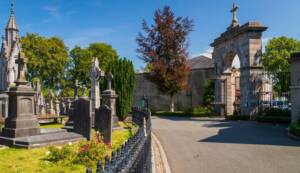
Next door, and directly accessible via a gateway from the Botanic Gardens, Glasnevin Cemetery is another surprising gem. Featuring in James Joyce’s Ulysses, it is the resting place of many a famous Irish person, and towering over it all is a round tower, marking the tomb of Daniel O’Connell. A political leader, O’Connell is known in Ireland as The Liberator. His campaign for an ecumenical resting place led to the Cemetery opening in 1832. Today, visitors come to find the graves of notable figures including Charles Stewart Parnell, Éamon de Valera, Maude Gonne, Brendan Behan, Christy Brown and Luke Kelly of The Dubliners. An exhibition at the cemetery celebrates many of the 1.5 million lives remembered in this remarkable place.
Built into the wall of Glasnevin Cemetery, John Kavanagh’s AKA The Gravediggers is one of the city’s most authentic pubs. In the same family since it first opened in 1833, it was once so infamous as a pre-funeral stop, that a by-law was introduced to restrict burials to before noon, in the hopes of keeping people sober enough to make it to the gravesides of their loved ones on time. Nowadays, it is full of atmosphere, a haunt of regulars, some celebrities and, if rumours are true, possibly a ghost or two into the bargain.

So, next time you’re sitting in the Gardens at The Merrion Hotel, contemplating your next adventure, a visit to the Botanic Gardens could be the perfect way to spend your day. The National Botanic Gardens is approximately 5km from The Merrion Hotel. Admission is free and parking is available at a charge. Some tours are free, others from €5, See www.botanicgardens.ie for more. Public transport is via the E1 bus from St Stephen’s Green.
See also: The National Botanic Gardens at Kilmacurragh. This 18th Century Country Estate in Kilbride, Co Wicklow includes many wonderful specimen trees, and is famous for its rhododendron collections. Founded in 1712, there are 52 acres to explore, including a lake, yew walks, meadows and woodland rambles. Free, and open year-round, there is a charming café on site. Dogs allowed, but must be on a leash. Approximately one hour’s drive from The Merrion Hotel.