
Music in Georgian Dublin
Today’s visitors may walk in the footsteps of Thin Lizzy, Sinead O’Connor and U2, or dive into a lively Trad session, but Dublin’s rich musical history runs deeper, with its classical roots in the city’s Georgian past. The Georgian period in Dublin was known as the city’s Golden Age, and it was certainly a golden age for classical music. Handel chose it as the place to premiere his now legendary Messiah, operas were performed in the city’s concert halls and theatres, and chamber music featured as the centerpiece of soirees at all the best addresses.
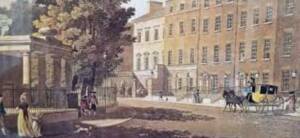
At the heart of these was No 24 Upper Merrion Street, the finest of the four townhouses that today make up The Merrion Hotel. The house was home to Garret Wesley, Lord Mornington, who moved in, in 1769, shortly after the building was completed. Once established, he quickly set about filling its elegant rooms with music. He also filled it with children, and later that same year, his son Arthur was born. Arthur would go on to become Duke of Wellington, and Prime Minister of the United Kingdom, but that’s another story.
Garret Wesley was a musical prodigy. Even as a child, he was a talented violin player. He taught himself the harpsichord and organ, and composed his own works from an early age. A decade before moving in to No 24, he had founded the first Academy of Music in Ireland, and had become the first Professor of Music at Trinity College Dublin. With the Academy, he put on music concerts, which raised money to establish what is now the Royal Hospital in Donnybrook
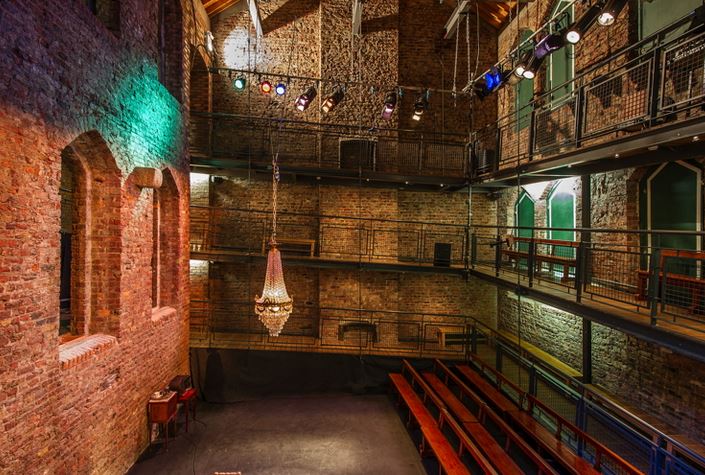
He also found time to compose glees, church music and a five act opera, Caractacus, which was performed at The Theatre Royal, Smock Alley in Dublin in 1764. Today’s Smock Alley Theatre, Dublin’s oldest surviving theatre, is housed in a beautifully converted 19th Century church on the same site. It was in recognition of Wesley’s musical achievements and charitable work that he had been created the Viscount Wellesley and Earl of Mornington in 1759, so it was no wonder he was on the look out for a new Dublin residence to match his increased consequence.
No 24 proved the perfect setting, and recitals and opera became so popular in Dublin, with international casts causing a stir amongst the ladies, and one writer declaring that “Italian singers were invited over and fair dames of Ireland learned to expire at an opera.” But Wesley’s music and charitable passions were to be his financial undoing. He ended up leaving Dublin for London, where at the time it was said to be less expensive to live. When he died, his heir had to mortgage the family estates, and one wag remarked that his fortune had been “fiddled away”.
Other Irish composers from around this time include Thomas Moore, who was born in 1779. Best known for his Irish Melodies, Moore had humble beginnings, having been come into the world over his parents’ grocery shop on Dublin’s Aungier Street. Thanks to his extraordinary talent, he would go on to move in the finest aristocratic circles, including getting to know the Prince Regent, later King George IV.
Born just three years later in Dublin, John Field came from a much more musical family, and had an upbringing including lessons with the finest tutors from across Europe. Credited with creating the Nocturne, as a concert pianist his work was praised by Haydn, and his own music influenced composers from Chopin to Brahms, Schumann and Liszt, to Mendlessohn. His life is commemorated at Dublin’s National Concert Hall with the John Field recital room named in his honour.
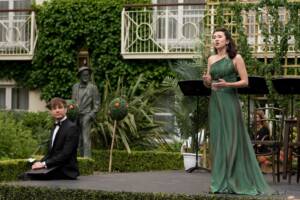
The fertile musical ground of Dublin, created and supported by Garret Wesley is a tradition that continues to this day, and The Merrion’s Drawing Rooms and private rooms still ring with its legacies. We are proud to honour it with musical partnerships with some of Ireland’s most illustrious companies, keeping the thread alive. Devotees look forward to the annual summer Opera in the Garden performances from the Wexford Festival Opera, while we also take great pleasure in supporting concert series at The National Concert Hall.
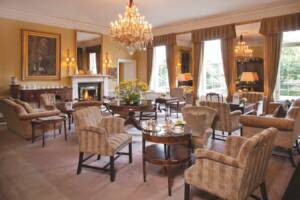
More recently we have celebrated the opening of the new Whyte Recital Hall with our neighbours the Royal Irish Academy of Music on Westland Row, so look out for upcoming concerts, and pop ups from Academy scholars in the Drawing Rooms at The Merrion Hotel.